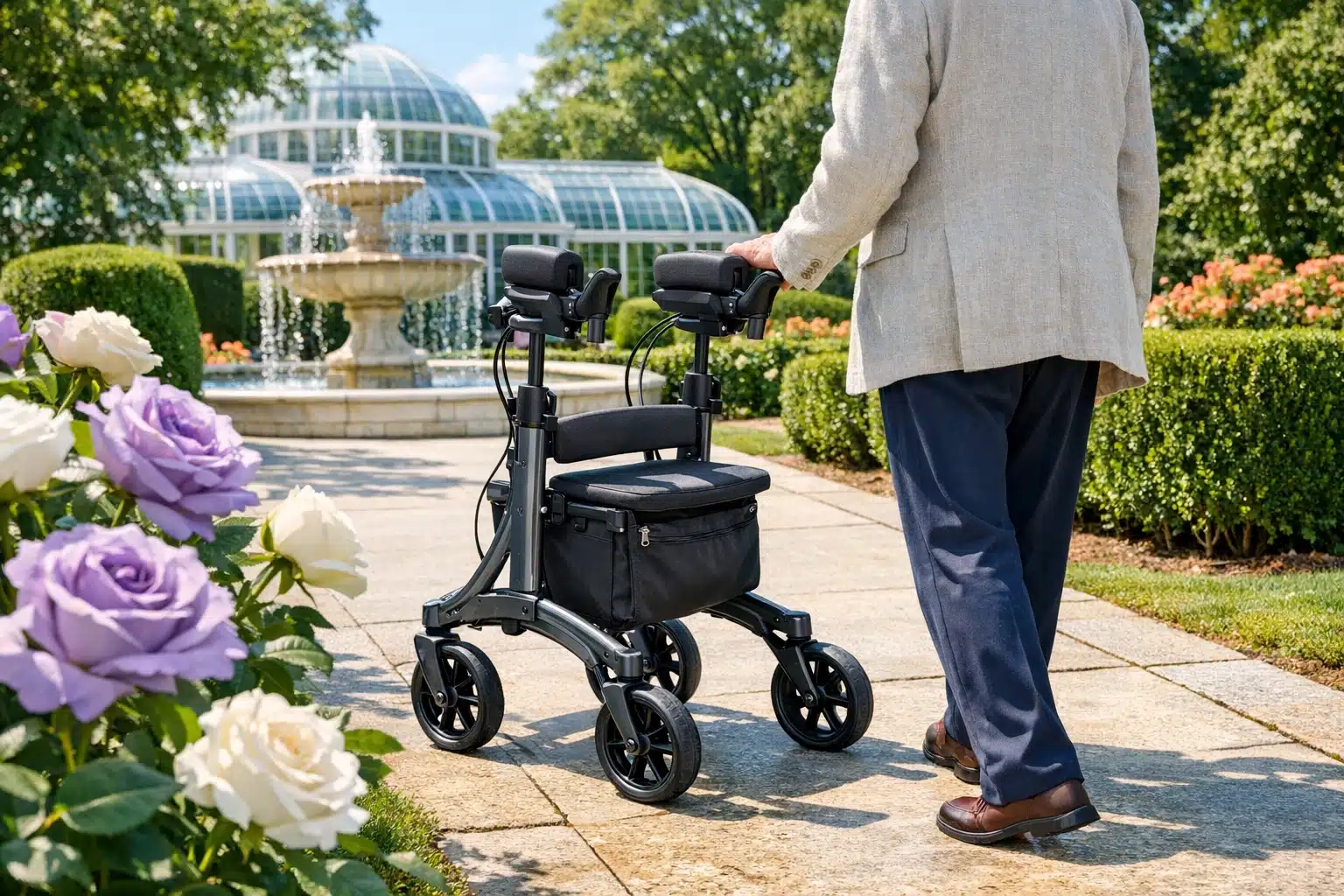
The New Mobility Gadget That’s Replacing Walkers in 2026
In 2026, more older adults are looking beyond the classic metal walker and discovering a newer option that feels steadier, smoother, and far less clinical. The device drawing the most attention is the smart upright rollator, a mobility aid designed to support the forearms, improve posture, and move more naturally across kitchens, sidewalks, and store aisles. Interest is rising because many users find it less tiring than a standard walker and easier to live with every day. For seniors who want confidence without feeling pinned to bulky equipment, that change is genuinely meaningful.
Article Outline
- What the new mobility gadget actually is and how it differs from a standard walker
- Why many seniors still have not heard about it despite growing demand
- Why 2026 has become the year this device moved into the spotlight
- How it helps seniors in daily life and where it can outperform traditional walkers
- How to choose one carefully, safely, and realistically
What the New Mobility Gadget Actually Is
The phrase new mobility gadget can sound like something out of a trade show, but the device most people are talking about in 2026 is usually the new-generation upright rollator, often called a smart upright rollator when it includes added features. At its core, it is still a mobility aid, yet it solves a complaint many seniors have had for years: standard walkers can encourage a hunched posture, can feel awkward in motion, and can make everyday movement look and feel more medical than necessary.
An upright rollator changes the geometry of support. Instead of placing the hands low and forward, it allows the user to hold higher grips or rest the forearms on padded platforms. That simple shift can help the chest open, the neck stay less strained, and the body remain closer to a natural walking position. Many models also include a built-in seat, storage bag, easy-squeeze brakes, and larger wheels that roll better over door thresholds, sidewalk seams, and rougher parking lot surfaces.
Some versions in 2026 include practical technology rather than flashy tech for its own sake. Depending on the brand and price range, a buyer may find:
- front lights for evening visibility
- simple posture prompts or display screens
- GPS location sharing for caregivers
- fall alert functions in selected models
- USB charging ports for phones or accessories
- folding frames designed for car trunks
Still, the real breakthrough is not a gadget screen or a sensor. It is the combination of better ergonomics and better usability. A standard walker often needs to be lifted, placed, and advanced in short cycles. For people with arthritis, reduced grip strength, shoulder pain, or fatigue, that motion can be frustrating. A conventional rollator rolls more easily, but many users still lean down into it. Upright models aim to reduce that fold-forward pattern by bringing support closer to the body.
It is important to keep the trend in perspective. This device is not replacing every walker for every senior. Someone who must put substantial weight through the frame after surgery, or who has very specific rehabilitation needs, may still do better with a traditional medical walker prescribed by a clinician. Yet for older adults who can walk and mainly need balance support, posture assistance, and confidence outdoors, the upright rollator is increasingly the device that feels less like equipment and more like freedom with wheels.
Why Most Seniors Have Not Heard of It Yet
One of the most interesting parts of this 2026 trend is that it grew quietly. Many seniors have heard of walkers, canes, wheelchairs, and scooters, but the upright rollator often sits in a strange middle ground. It is not new enough to dominate national headlines, and it is not old enough to be a familiar household term. That leaves many people unaware of it until a physical therapist, caregiver, or friend points one out in the real world.
Awareness also lags because the mobility market is fragmented. Seniors do not usually discover products the same way younger buyers find phones or fitness devices. A mobility aid often enters the conversation after a fall, after surgery, after a change in stamina, or during a doctor visit. In that setting, the first recommendation may still be the most basic option because it is familiar, cheaper, easier to explain, or more clearly covered under existing reimbursement rules. Medical supply stores may stock only a few advanced models, and if those are not displayed well, they can remain almost invisible.
Several forces keep this category under the radar:
- terminology is confusing, with names like upright walker, forearm rollator, posture walker, and smart rollator used interchangeably
- many clinicians still begin with standard walkers because they are simple and widely available
- insurance coverage can be inconsistent for premium features or newer designs
- some seniors rely on local stores, not online research, where product variety may be limited
- marketing often targets caregivers and rehab professionals rather than older adults directly
There is also a social reason. Some seniors avoid mobility products until they feel they truly need one, and when they do start looking, they tend to search for familiar terms. If a person types walker into a search engine or asks a pharmacist about a walker, they may never hear about upright designs unless someone redirects the conversation. In other words, the product exists, but the language pathway to find it is weak.
Then there is the digital gap. Research from organizations such as Pew and AARP has shown for years that older adults are increasingly online, but comfort with shopping, comparing features, and trusting online health-related purchases still varies widely by age, income, and experience. News may travel at internet speed, yet in the world of mobility equipment, it often moves at the pace of referrals, family recommendations, and what is available on a nearby showroom floor. That is why a device can trend in 2026 and still feel like a secret in many senior households.
Why It Is Trending in 2026
The rise of the upright rollator in 2026 did not happen because of one viral video or one clever product launch. It happened because several long-building trends finally met in the same place. Older adults are living longer, staying active later, and expecting mobility aids to support real life rather than merely prevent a fall in the hallway. A generation that used fitness trackers, lightweight strollers, wheeled luggage, and ergonomic office gear is now asking a fair question: why should a mobility aid feel stuck in the past?
Fall prevention is a major part of the story. Public health data has long shown how serious falls can be for older adults. The CDC has reported that about one in four adults age 65 and older experiences a fall each year in the United States. That does not mean every senior needs the same device, but it explains why stability, confidence, and safer walking have become central topics for families, clinicians, and home health providers. When a mobility product offers better posture, a seat for planned rest, and easier movement over common surfaces, interest naturally grows.
Design improvements also arrived at the right time. By 2026, many upright models are lighter than earlier versions, easier to fold, and better suited to mixed indoor-outdoor use. Brakes are more refined, wheels are more capable, and frames often look less institutional. Some models include tech features, but even the non-digital versions benefit from better engineering. The result is a device that fits modern expectations: practical, portable, and less awkward to use in public.
Several 2026 forces are pushing the category forward at once:
- greater focus on active aging instead of passive assistance
- more caregiver research before purchase decisions
- better product demos on retailer sites and video platforms
- growing interest in staying mobile for errands, travel, and social life
- expanded conversations about posture, fatigue, and joint strain
There is a cultural angle as well. Seniors increasingly want tools that help them keep doing normal things: visiting a farmers market, walking the dog, standing in line at a museum, or moving through an airport without feeling trapped by the device itself. The upright rollator fits that mood. It suggests movement rather than decline. For many users, the first trial walk feels less like managing equipment and more like getting a piece of the day back. That emotional shift, combined with better product design and stronger word of mouth, is a big reason 2026 became the year this category stepped out of the background.
How It Is Helping Seniors and Replacing Traditional Walkers
The reason upright rollators are displacing traditional walkers for many seniors is not fashion. It is function. A mobility aid succeeds when it fits the body, supports safer movement, and makes everyday tasks less draining. For a large group of older adults, especially those dealing with mild to moderate balance issues, fatigue, back discomfort, or reduced confidence outdoors, upright designs can deliver a better walking experience than the classic front-facing frame.
The biggest difference is posture. Standard walkers often position the hands lower than ideal, which can pull the shoulders forward and encourage the user to look down. Over time, that may contribute to neck tension, upper-back strain, and a feeling of shuffling through space. Upright models allow the user to stand taller with support closer to the trunk. That does not guarantee perfect form, and it does not erase every balance problem, but many users report that walking feels less cramped and less exhausting.
Daily convenience matters too. A traditional walker can be excellent inside the home, especially when maximum stability is required, but it may feel clumsy in the outside world. Upright rollators tend to help with:
- moving more smoothly through grocery stores and long hallways
- taking rest breaks with a built-in seat
- carrying a phone, water bottle, medication pouch, or small purchases
- crossing uneven pavement with less jarring motion
- maintaining a more forward-looking visual field instead of staring at the floor
That last point is easy to underestimate. Looking up instead of down can improve awareness of people, obstacles, and surroundings. For some seniors, that alone changes how secure they feel in public. Confidence is not a small benefit. If a person avoids walking because their device feels awkward, heavy, or embarrassing, overall mobility may shrink. When the aid feels easier to manage, the person is more likely to use it consistently, and consistency often supports safer habits.
Still, the comparison should stay honest. Upright rollators are not superior in every situation. They may be heavier than the simplest walker. They may cost more. They are not ideal for someone who needs to bear significant body weight through the frame, and certain neurological or cognitive conditions may call for a different design altogether. Replacing a traditional walker only makes sense when the person’s strength, balance, reflexes, and living environment match the device.
That is why clinicians often frame the shift this way: the best mobility aid is the one that fits the user’s real gait pattern and daily routine. For many seniors in 2026, the upright rollator is winning that test. It supports movement with less strain, helps preserve independence, and makes the act of walking feel less like a negotiation. In practical terms, that is how a new category replaces an old one: not by hype, but by being better suited to ordinary life.
How to Decide If This Device Is Right for You
If the upright rollator sounds appealing, the next step should not be an impulsive purchase based on a single advertisement. A good fit matters. Height, grip comfort, wheel size, braking strength, hallway width, trunk space, and the user’s medical needs all affect whether the device will help or frustrate. Think of it less like buying a gadget and more like choosing footwear for a long journey. The right pair carries you forward quietly; the wrong pair becomes the whole story.
A physical therapist or occupational therapist can be especially helpful when deciding between a standard walker, a conventional rollator, and an upright design. They can observe gait, turning, endurance, reach, and posture, then suggest what kind of support makes the most sense. A physician may also advise on issues such as recovery after surgery, dizziness, severe arthritis, or neurological conditions that change the safety picture.
When evaluating a model, it helps to ask clear questions:
- Can the height be adjusted enough for a comfortable upright position?
- Are the brakes easy to use with limited hand strength?
- Is the frame stable when turning, backing up, and stopping?
- Does it fit through bathroom and bedroom doorways at home?
- Will the wheels handle the surfaces used most often?
- Is the seat comfortable and easy to access for rest breaks?
- Can it be folded and lifted into a car without strain?
Cost also deserves careful thought. More advanced models can be significantly more expensive than basic walkers, and coverage varies by location, insurer, and exact product classification. That does not mean the device is not worth considering, but buyers should look beyond the purchase price. Durability, comfort, and regular use all matter. A cheaper aid that stays parked in the corner is not automatically the better value.
It is also wise to test the device in realistic conditions. If possible, try it on indoor flooring, thresholds, sidewalks, and store aisles. Check whether the basket is practical, whether the turning radius feels manageable, and whether the handlebars or forearm pads create pressure points. Small details become large details after a week of real use.
Most of all, remember that the goal is not to own the trendiest mobility product in 2026. The goal is to move more safely, more comfortably, and with less hesitation. If an upright rollator helps a senior walk farther, rest when needed, and keep participating in daily routines, it may be an excellent replacement for a traditional walker. If it does not, there is no failure in choosing something simpler. The right device is the one that gives life more room to happen.
Conclusion: What Seniors and Caregivers Should Take From the 2026 Trend
For seniors and the families who support them, the big takeaway is simple: mobility aids are evolving, and older choices are no longer the only practical choices. The upright rollator has become one of the most talked-about devices of 2026 because it responds to real complaints about walkers, including poor posture, limited comfort, and awkward everyday use. Its rise does not mean the standard walker is obsolete, but it does show that many people want support that feels more natural and less restrictive.
If you are a senior exploring options, or a caregiver trying to make a smart decision, start with daily reality rather than marketing language. Think about where walking happens, what surfaces are involved, how often rest breaks are needed, and whether posture or fatigue has become a problem. Then ask for a proper fitting and, if possible, a real-world trial. The best mobility aid is not the newest one on the shelf. It is the one that helps you stay steady, stay active, and keep doing the ordinary things that make a day feel like your own.