10 Day Trips to Japan For Seniors
Japan is often celebrated for speed and spectacle, but it also rewards travelers who prefer a calmer rhythm. For seniors, the right day trip can offer temples, gardens, coastlines, and regional food without the strain of packing and moving hotels every night. Efficient rail links, clean stations, and plentiful places to pause make many routes easier than they first appear. This guide highlights ten memorable outings and explains which ones suit different energy levels, interests, and mobility needs.
Outline: What Makes a Senior-Friendly Day Trip in Japan
A good day trip for senior travelers is not simply a famous destination placed on a map near a large city. It needs to work in practical terms. The train ride should be manageable, station changes should be limited, and the destination should offer a satisfying experience even at an unhurried pace. Japan is especially well suited to this style of travel because its public transportation is reliable, timetables are easy to follow, and many stations provide elevators, escalators, accessible restrooms, lockers, and clearly marked exits. Even when a place is popular, the journey itself often feels orderly rather than chaotic.
Another reason Japan lends itself to senior travel is demographic reality. The country has one of the world’s oldest populations, and everyday infrastructure often reflects that. Priority seating is standard, taxis are easy to use in most tourist areas, and attractions frequently have benches, tea rooms, museum lounges, or garden paths where visitors can rest. Of course, not every destination is equally gentle. Some temple complexes have stone steps, some ropeways may stop due to weather, and a few castle interiors are steep. That is why comparing destinations matters just as much as admiring them.
This article is organized around ten day trips that balance beauty, cultural value, and comfort. Some are ideal for travelers who want a nearly flat walking day, while others are better for seniors who remain active and do not mind stairs. Here is the outline of the ten featured trips:
- Kamakura from Tokyo for temples, the Great Buddha, and a relaxed coastal atmosphere.
- Nikko from Tokyo for grand shrine architecture and mountain scenery.
- Hakone from Tokyo for lake views, museums, and a slower scenic circuit.
- Nara from Kyoto or Osaka for deer park landscapes and major Buddhist heritage.
- Uji from Kyoto for tea culture, riverside calm, and compact sightseeing.
- Kobe from Osaka or Kyoto for harbor walks, good food, and urban comfort.
- Himeji from Osaka or Kyoto for Japan’s most celebrated original castle and garden.
- Kurashiki from Okayama for canals, storehouses, and an easy strolling district.
- Miyajima from Hiroshima for shrine views, sea air, and a memorable island setting.
- Otaru from Sapporo for a historic canal area, seafood, and a nostalgic port-town mood.
The sections that follow compare these trips by travel time, walking difficulty, cultural focus, and atmosphere. Think of this as a practical companion rather than a rigid ranking. The best trip is not always the most famous one; for many older travelers, the winner is the place that leaves enough energy for a good lunch, a quiet bench in the shade, and the pleasant feeling of having seen a great deal without needing to rush.
1. Kamakura, Nikko, and Hakone: Three Excellent Day Trips from Tokyo
Tokyo is a thrilling base, but it can also feel relentless. That makes nearby escapes especially valuable for senior travelers who want a full day of culture or scenery without another night of hotel logistics. Among the strongest options are Kamakura, Nikko, and Hakone. Each offers a distinct mood, and each suits a slightly different kind of traveler.
Kamakura is often the easiest first choice. Reached in roughly one hour from central Tokyo on direct JR lines, it combines famous sights with a mellow, almost seaside-town gentleness. The Great Buddha at Kotoku-in and the temple gardens of Hasedera are major draws, yet the town is also enjoyable in quieter ways: a slow coffee break near the station, a ride on the charming Enoden line, or a simple stroll through leafy residential streets. For seniors, Kamakura’s main advantage is flexibility. It is possible to see one or two major sights and still feel the day was worthwhile. Walking is moderate rather than minimal, and some temple grounds involve slopes or steps, but taxis can shorten the effort.
Nikko is richer, grander, and more demanding. The journey from Tokyo usually takes around one hour and forty minutes to two hours, depending on the train. The reward is extraordinary. The Toshogu Shrine complex, part of a UNESCO World Heritage area, is known for lavish carvings and forested surroundings that feel ceremonial from the first approach. Nikko can be deeply moving, especially in autumn when the hills glow with color, but it is less forgiving than Kamakura. There are more stairs, wider grounds, and a stronger temptation to overpack the itinerary with waterfalls and lakes. Seniors who enjoy history and still move confidently on uneven surfaces often love Nikko. Those who want a softer day may prefer Kamakura instead.
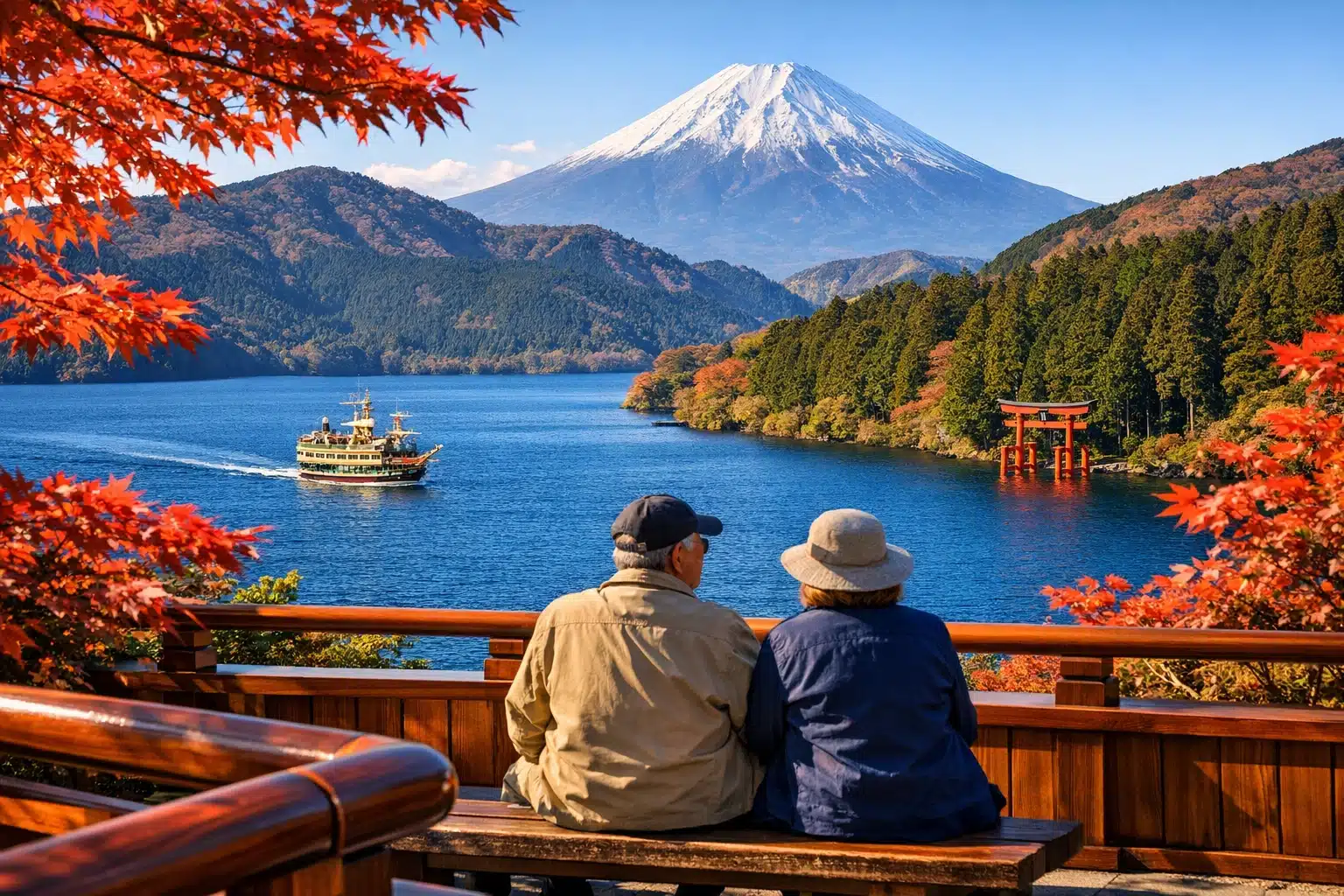
Hakone sits in a third category: scenic and restorative. Depending on the route, it is about eighty-five to ninety minutes from Shinjuku or a bit longer if changing at Odawara. Many visitors imagine Hakone as a fast-moving checklist of train, cable car, ropeway, boat, and museum. For seniors, that is not always the best approach. A wiser plan is to choose just two or three elements, such as a lakeside cruise on Ashi, the Hakone Open-Air Museum, and a long lunch with mountain views. On a clear day, glimpses of Mount Fuji can make the landscape feel almost theatrical, as if the mountain has quietly stepped onto a stage.
In simple comparison:
- Choose Kamakura for balance, manageable travel, and a strong mix of culture and comfort.
- Choose Nikko for ornate heritage and dramatic atmosphere if you are comfortable with more walking and stairs.
- Choose Hakone for scenery, fresh air, and a restorative pace, especially if you avoid trying to do the entire sightseeing loop.
All three work well for seniors, but they reward different priorities. Kamakura is the most adaptable, Nikko is the most monumental, and Hakone is the most leisurely when approached with restraint.
2. Nara, Uji, and Kobe: Gentle Yet Rewarding Escapes from Kyoto or Osaka
If Tokyo’s day trips are about contrast, Kansai’s are about refinement. From Kyoto or Osaka, senior travelers can reach several outstanding destinations in under an hour, and the variety is impressive. Nara offers ancient religious significance on a broad green stage. Uji specializes in calm detail rather than spectacle. Kobe provides urban ease, waterfront air, and excellent dining. Together, they form a highly practical trio for older visitors who want interesting days without exhausting transit.
Nara is the classic option, and it remains deservedly popular. From Kyoto, the train ride is usually around forty-five minutes; from Osaka, it can be even shorter. The main sightseeing zone is spacious rather than dense, which is both an advantage and a caution. Nara Park, Todai-ji Temple, Kasuga Taisha, and the famous deer create an atmosphere that feels almost pastoral despite the city’s historic importance. The giant Buddha at Todai-ji is one of Japan’s most impressive religious sights, and many travelers remember it for years. For seniors, Nara is relatively straightforward because much of the central area is open and scenic. The challenge is distance rather than steepness. A full day can involve more walking than expected, so pacing matters. Stopping for tea or lunch near the park turns the visit from tiring to pleasurable.
Uji is smaller, quieter, and often underrated. It lies only about twenty to thirty minutes from Kyoto, making it one of the least demanding day trips on this list. Famous for high-quality green tea, Uji feels like a place that invites conversation rather than conquest. Byodo-in, with its elegant Phoenix Hall, is the headline attraction, and the nearby tea shops make it easy to structure a restful outing around one major sight, a riverside walk, and a leisurely tasting session. Seniors who enjoy manageable distances and a contemplative mood often find Uji ideal. It does not overwhelm the senses. Instead, it unfolds gently, like steam rising from a fresh cup of matcha.
Kobe adds a different flavor. Reached in roughly twenty-five to thirty minutes from Osaka or under an hour from Kyoto, it is smooth, polished, and comfortable. The harbor area, Meriken Park, and Harborland are relatively easy to navigate, with broad promenades and plenty of seating. Seniors interested in food often appreciate Kobe as much as the city’s scenery. A good lunch can become the center of the outing, whether the choice is beef, bakery culture, or Chinatown snacks in Nankinmachi. The Kitano district, with its historic Western-style houses, is appealing but hillier; travelers with mobility concerns may want to focus on the flatter waterfront instead.
For comparison, Nara is best for iconic heritage, Uji is best for a compact and low-stress day, and Kobe is best for comfort mixed with culinary enjoyment. None of them needs an aggressive schedule. In fact, the senior traveler’s advantage here is wisdom: knowing that one excellent temple, one satisfying meal, and one quiet hour by a river or harbor can be more memorable than racing from site to site.
3. Himeji, Kurashiki, Miyajima, and Otaru: Four Memorable Trips for Seniors Seeking Variety
Beyond the usual Tokyo and Kyoto orbit, Japan offers day trips that feel wonderfully distinctive. Himeji, Kurashiki, Miyajima, and Otaru appeal to different interests, yet they share something important: each can deliver a strong sense of place within a single day. For senior travelers, that is often the key measure of success. A destination should feel complete, not like an exhausting preview of something that requires a second attempt.
Himeji is the most famous of these four, and for good reason. From Osaka or Kyoto by shinkansen, the trip is fast, often between thirty and fifty-five minutes depending on the departure point. Himeji Castle is one of Japan’s finest original castles and a UNESCO World Heritage Site, known for its white exterior and elegant lines. The approach from the station is refreshingly clear; on a good day, the castle seems to float at the end of the boulevard. For seniors, the important distinction is between admiring the castle and climbing through it. The grounds and exterior views are rewarding on their own, while the interior involves steep wooden stairs that may not suit everyone. Nearby Koko-en Garden provides an ideal counterbalance, with landscaped ponds, teahouses, and benches that encourage a slower rhythm.
Kurashiki is less monumental but often easier on the body and surprisingly rich in atmosphere. Best visited from Okayama, it is only about fifteen minutes away by local train. The Bikan Historical Quarter, with its canals, willow trees, white storehouses, and old merchant buildings, is one of those places where the scenery seems to settle the mind. Much of the pleasure lies in simply being there. The terrain is relatively flat, there are museums and cafes close together, and the pace feels forgiving. Seniors who enjoy art may also appreciate the Ohara Museum of Art, which adds substance to what could otherwise seem like a purely picturesque stop.
Miyajima, commonly visited from Hiroshima, offers perhaps the most poetic setting of the group. Reaching the island usually involves a train or tram connection and then a short ferry ride. That extra step can sound complicated, yet many travelers find it worthwhile for the sea views alone. The floating torii gate of Itsukushima Shrine is iconic, and the waterfront area near the ferry terminal is accessible enough for a rewarding half-day or full day at a measured pace. The island does include slopes if you venture farther inland, so seniors may prefer to stay near the shrine and shopping street. In that zone, the experience is scenic, manageable, and deeply atmospheric, especially when the tide changes the appearance of the shrine.
Otaru, a favorite from Sapporo at roughly thirty to forty-five minutes by train, is perfect for travelers who like history with a touch of nostalgia. Its canal district, stone warehouses, seafood markets, and glass workshops create an old-port charm unlike the temple-heavy destinations elsewhere in Japan. Much of central Otaru is walkable, though some streets incline away from the waterfront. For seniors, it is easy to design a pleasant route centered on the canal, lunch, and one or two nearby museums or shops.
If compared side by side, Himeji is the strongest for national heritage, Kurashiki is the gentlest for strolling, Miyajima is the most scenic and symbolic, and Otaru is the most distinctive in northern character. Together they show how varied Japan can be without demanding constant travel reinvention.
4. Practical Comparisons: Comfort, Walking Difficulty, and How to Pick the Right Trip
When senior travelers choose a day trip, the most useful question is not “Which place is the most famous?” but “Which place fits today?” Energy levels shift, weather changes plans, and interests differ from one traveler to another. A thoughtful choice can turn an ordinary travel day into one of the highlights of the trip. An overambitious one can leave even experienced visitors tired before dinner.
Start with transit tolerance. If you prefer the easiest possible train day, Uji, Kobe, Nara, Kamakura, and Otaru are among the simpler options from their usual base cities. They generally involve direct or straightforward rail journeys and have core sightseeing areas that are easy to understand once you arrive. Nikko and Miyajima involve a bit more effort, whether because of travel time, transfers, or the spread of sights. Hakone can be easy or complicated depending on how much of the transport circuit you attempt. Seniors often enjoy it most when they simplify the plan rather than chase every viewpoint.
Walking difficulty is the next major factor. A useful way to think about the list is this:
- Most manageable walking days: Uji, Kurashiki, Kobe waterfront, Otaru canal area.
- Moderate walking with some slopes or larger grounds: Kamakura, Nara, Miyajima near the shrine, Hakone with a selective itinerary.
- More demanding days or places with significant stairs: Nikko shrine areas, Himeji castle interior, hillier parts of Kobe and Miyajima.
Food and rest opportunities also matter more than many guides admit. Kobe is especially good for travelers who want their meal to be part of the experience. Uji is excellent for tea lovers and those who appreciate frequent cafe breaks. Otaru works beautifully for seafood and market browsing. Kurashiki has a pleasant concentration of small cafes where resting does not feel like an interruption. By contrast, Nikko and some parts of Hakone are best enjoyed when you have already accepted that the day should include pauses built into the plan, not added only when fatigue appears.
Seasonality is another consideration. Spring and autumn are popular across Japan, but they are not automatically the easiest times for seniors because crowds can lengthen waits and reduce seating availability. Winter can make Otaru wonderfully atmospheric, though snow and ice require care. Summer brings lush greenery to Kamakura, Nara, and Miyajima, but humidity can be tiring. Starting early, taking a midday indoor break, and returning before commuter rush hour can greatly improve the experience.
Finally, do not underestimate the value of taxis for short hops. In Japan, using a taxi for the last part of a journey is often the difference between a pleasant outing and an overlong march. Senior travelers do not need to prove endurance. The goal is enjoyment, not mileage. Choosing one excellent district over three scattered attractions is usually the smarter move, and Japan rewards that style of travel with remarkable generosity.
5. Final Thoughts for Senior Travelers: Building a Rewarding Day at Your Own Pace
The best day trips in Japan for seniors are not defined by how much ground they cover. They are defined by proportion. A comfortable train ride, a destination with character, enough seating, a good lunch, and time to absorb what is in front of you: that is often the formula for a memorable day. Japan supports this approach unusually well. Its trains are punctual, its tourist information is generally reliable, and its destinations often provide layers of enjoyment, from architecture and gardens to local sweets and small encounters that never appear on an itinerary.
If you are deciding where to go first, match the destination to your mood. Choose Kamakura or Uji when you want a calm, balanced day. Choose Nara or Himeji when you want the satisfaction of seeing something nationally significant. Choose Kobe or Otaru when food, urban comfort, and easy strolling matter as much as sightseeing. Choose Hakone or Miyajima when scenery is the priority and you are willing to keep the schedule selective. Choose Nikko when you feel energetic and want a more dramatic historical setting. Choose Kurashiki when you want beauty without pressure.
A few final habits can make every outing smoother:
- Reserve limited express or shinkansen seats when possible, especially in busy seasons.
- Carry light and use station lockers rather than shouldering unnecessary bags.
- Plan only one major sight before lunch and treat anything after that as optional.
- Keep cash or an IC card ready for small purchases and local transit.
- Check weather carefully, particularly for Hakone, coastal areas, and winter destinations.
- Leave room for spontaneity, because some of the nicest moments come from an unplanned tea stop or a garden bench with a view.
For older travelers, Japan does not need to be rushed to feel exciting. In fact, its most lasting pleasures often emerge when the pace slows down. A temple bell in Kamakura, the reflection of a storehouse in a Kurashiki canal, the soft movement of deer in Nara, the sea breeze on Miyajima, or the glow of late afternoon on Himeji Castle can stay with you longer than any packed checklist. That is the real value of a well-chosen day trip. It lets you experience Japan deeply enough to remember not only what you saw, but how the day felt.